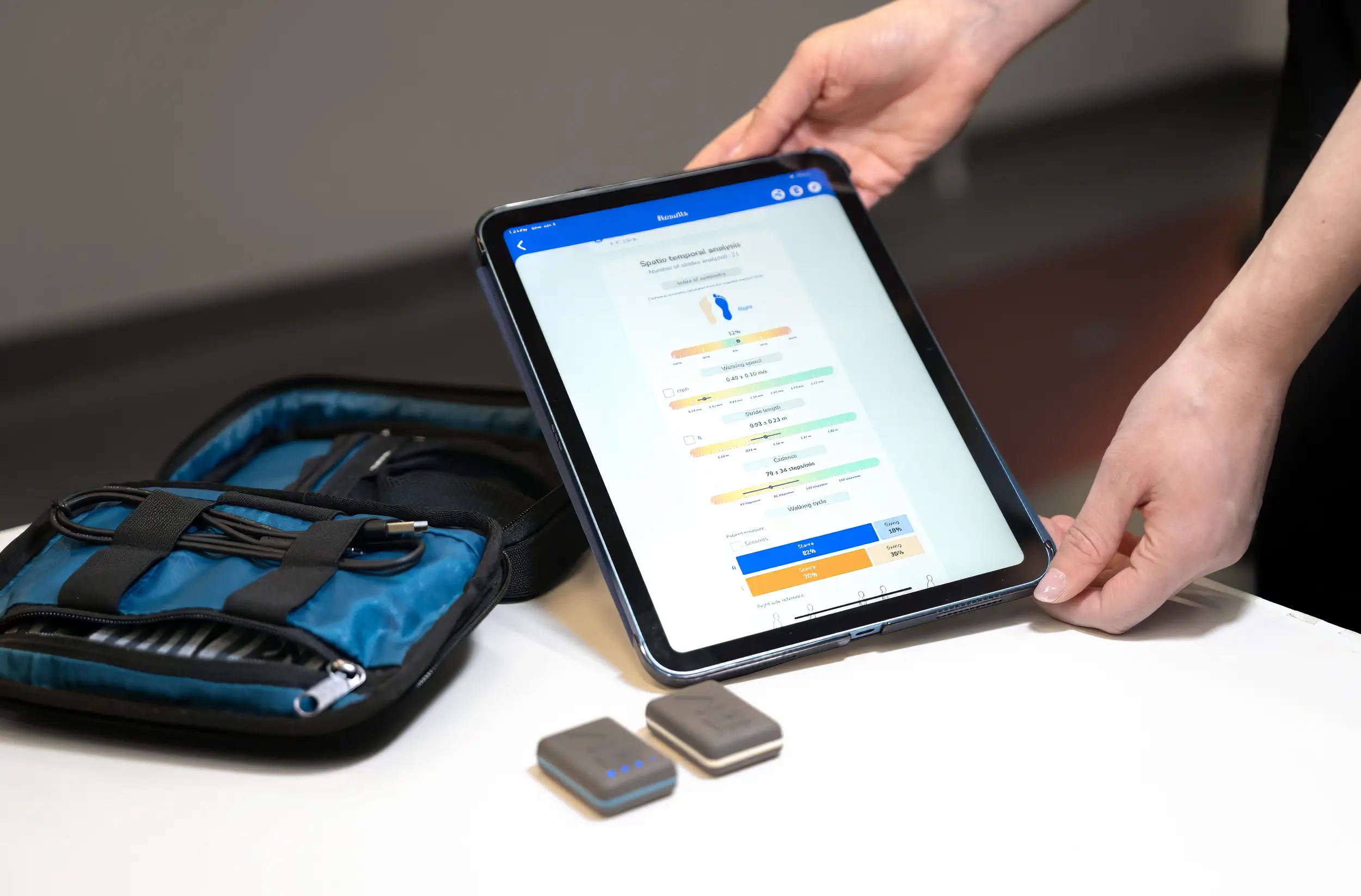
Addressing the Real-World Challenges in PT Clinics
Physical therapists rely on gait analysis to guide clinical decisions, track progress, and support documentation. But measuring and documenting robust, objective data often takes more time than is realistically available during a treatment session.
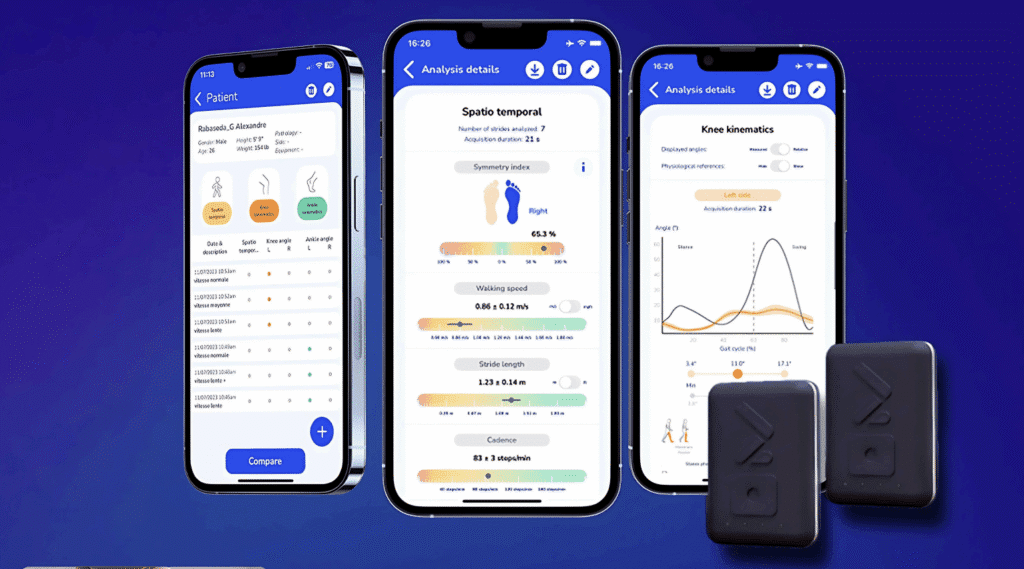
REEV created SENSE to make gait analysis faster and more practical in busy clinical settings. As part of the ongoing improvement process, PTs using SENSE have shared feedback on what works and what would make the gait analysis software even more useful for their practice.
The SENSE 2.0 updates were built directly from these PT insights. They focus on speeding up gait data acquisition, simplifying documentation, and creating a centralized gait analysis platform. PTs can spend less time managing data and more time focused on patient care.
Try REEV SENSE 2.0 free for 30 days in your clinic. Request your trial below.
SENSE 2.0: Summary of Gait Analysis Software Updates
The 2026 SENSE updates focus on streamlining both gait analysis data acquisition and documentation for physical therapists. The table below summarizes the 2.0 updates, followed by a more detailed explanation of how each supports clinical efficiency, documentation, and the patient experience.
SENSE Updates at a Glance
| SENSE 2.0 | Clinical Impact for PTs & Patients | |
| Data Acquisitions | Complete up to three data acquisitions simultaneously. | PTs can explain the test once and collect multiple datasets. Patients complete a single walk, reducing fatigue and variability in results. |
| Standardized Mobility Tests
(Timed Up and Go, 5 Times Sit-to-Stand, 10-Meter Walk Test, 6-Minute Walk Test) |
The TUG, 5xSTS, 10MWT, and 6MWT are built directly into the app with standardized instructions, images, a timer, and space for observations/notes. | Improved adherence to standardized testing procedures while eliminating the need for extra tools. Instructions and observations stay connected to the test, making documentation clearer, more consistent, and easier to defend if questioned by auditors. |
| Clinical Data & Reporting Detail | Added standard deviations for swing and stance phases, real-time alerts for inconsistent data, and RMSE indicator. In-app comparison of 2-6 analyses with L/R overlay. | Provides deeper insight into gait variability, asymmetry, and progress. Skilled observations remain tied to the data. Additional data leads to clearer clinical reasoning and justification of skilled care – important during audits and legal proceedings. |
| Data Exporting for Documentation | Data can now be exported as a PDF, Text, CSV, or PNG file.
Text file export can be directly pasted into the EMR. There is an option to anonymize the report by removing PHI. |
Allows PTs to put data directly into their daily note or evaluation rather than attaching a separate file – making it easier for auditors to see and understand.
Anonymization protects patient privacy and supports research, education, and case review use cases. |
A Centralized Gait Analysis Platform for Physical Therapists
With these updates, SENSE is no longer just a software for capturing specific gait metrics. It functions as a centralized gait analysis platform that brings sensor-based gait data, standardized mobility tests, clinical observations, and documentation-ready outputs into one workflow.
Whether you’re completing a detailed gait assessment, tracking change over time, or supporting documentation for reimbursement, SENSE 2.0 streamlines the process and keeps your data, observations, and reporting in one place.
REEV SENSE: Supporting Clinical Judgment, Not Replacing It
Physical therapists don’t need technology to recognize gait abnormalities. They observe atypical patterns and understand mechanisms nearly subconsciously.
SENSE 2.0 provides a fast, practical way to quantify and document what you already observe. This means spending less time managing data and documentation and more time focusing on the patient… or taking an actual lunch break.
Details About the REEV SENSE 2.0 2026 Updates
Update #1: Multiple Acquisitions Can be Completed During One Walk
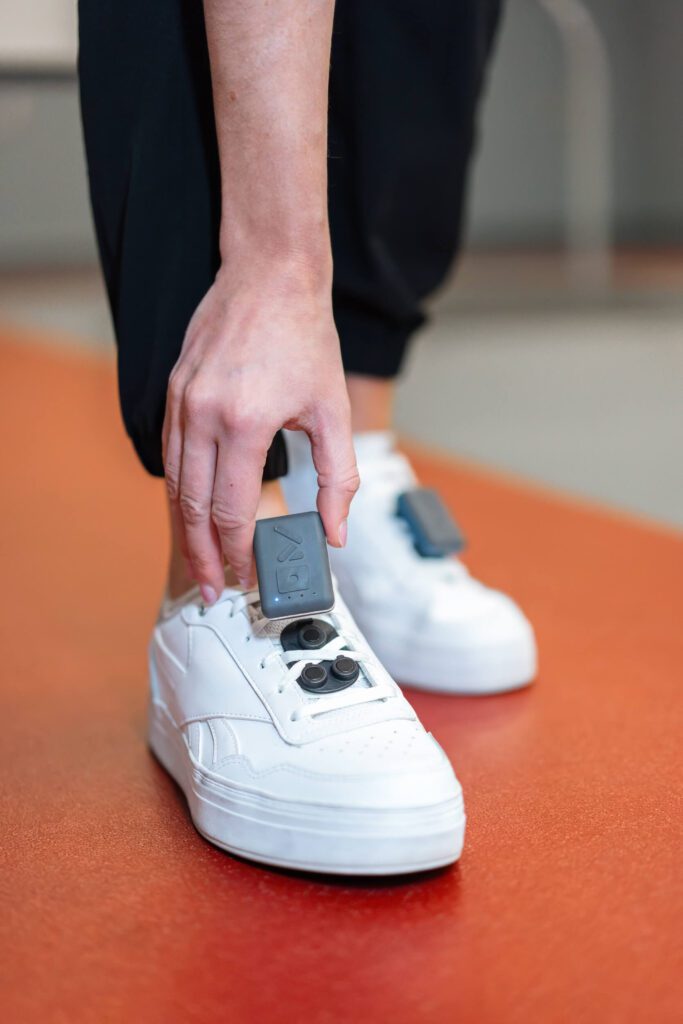
SENSE 2.0 allows PTs to combine two or three SENSE sets and capture multiple datasets simultaneously during a single walking trial.
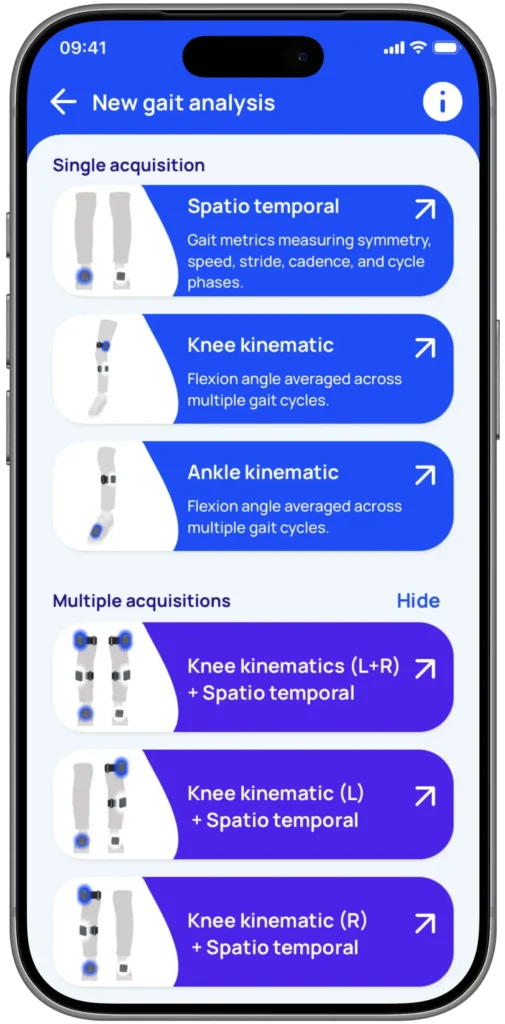
Here are examples of what you can record in just one walk with two pairs of sensors:
- Spatio-temporal analysis and kinematics of either the knee or ankle.
- Comparative left/right kinematics of the knee or ankle.
- Both ankle and knee kinematics of the affected side.
Why this matters for PTs:
- Reduces setup time and repeated test administration
- Captures more objective data without repeated walks
- Minimizes in-session variability from fatigue or symptom changes
How this benefits patients:
- Fewer repetitions of the walking task
- Reduced fatigue and discomfort during testing
- An even more accurate representation of their gait performance
This update is particularly valuable for patients post-CVA or those with significant deconditioning or pain, where repeated trials may not be well tolerated.
Update #2: Standardized Mobility Tests Built Into the App (no sensors needed)
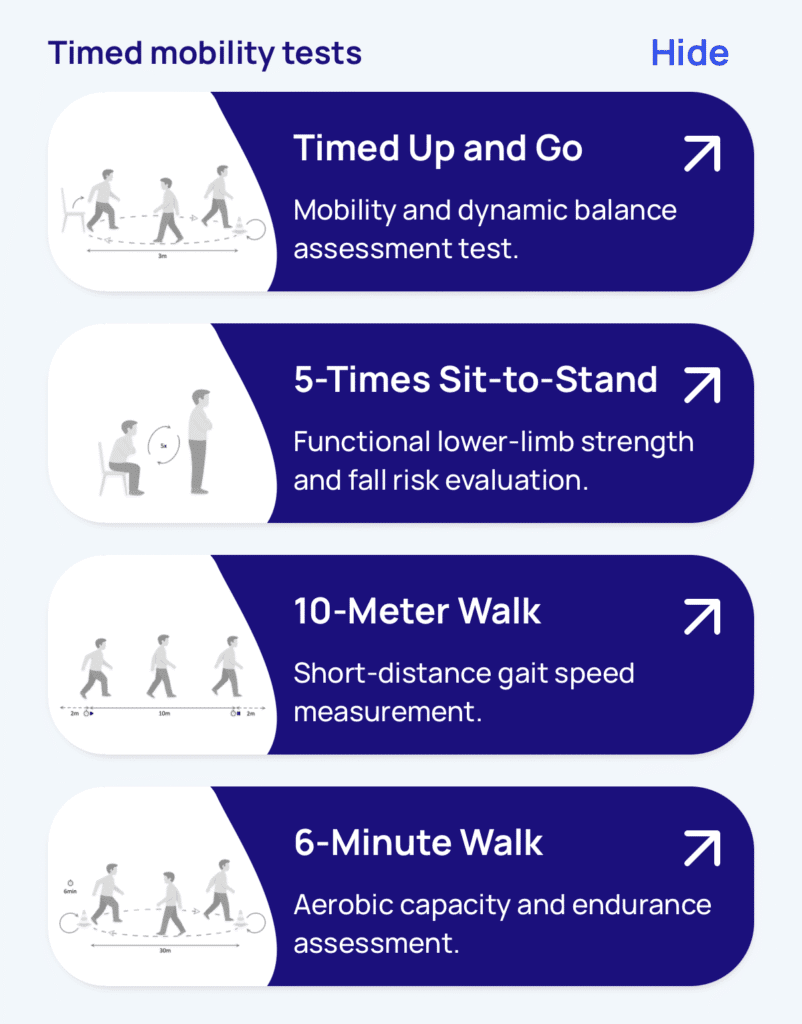
SENSE 2.0 now includes four standardized mobility tests that PTs frequently use, which can be completed within the app, without the sensors. Tests included are the TUG, 5xSTS, 10MWT, and 6MWT.
This keeps all the gait analysis data in one place and eliminates the need for PTs to get a separate stopwatch, remember standardized instructions, and jot down the time/observations separately.
Why this matters for PTs:
- Supports consistent test administration following standardized instructions
- Eliminates the need for a separate timing device or remembering observations
- Keeps all gait test results and skilled observations connected and easy to copy/paste into the EMR
How this benefits patients:
- Clear, consistent instructions improve test compliance
- PT can focus on the patient interaction and support
- Accurate, comprehensive medical records for continued care as indicated
By embedding these commonly used standardized mobility tests directly into SENSE, PTs of all experience levels will follow established procedures and reference in-app instructions if testing methods are ever questioned. This helps create more defensible documentation and eases the mental load for PTs.
Update #3: Enhanced Clinical Data Reporting
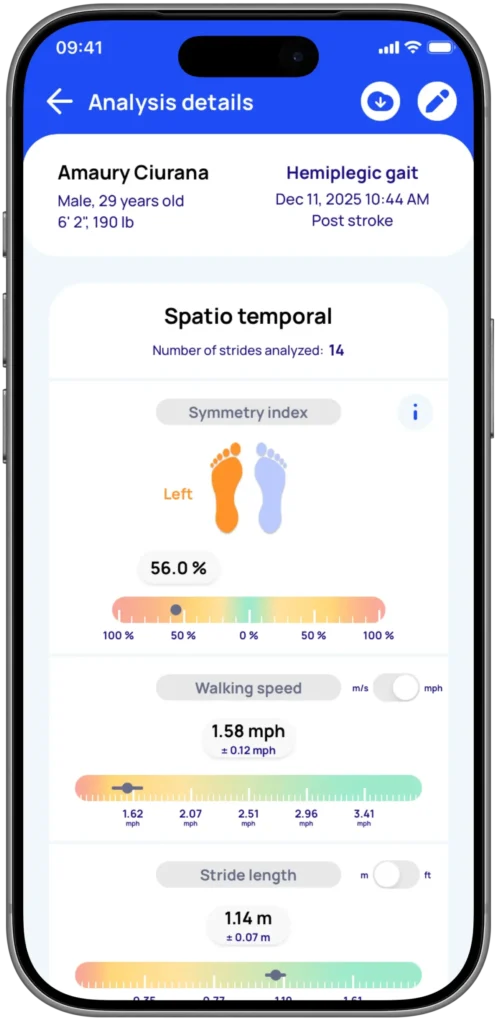
In cases with higher documentation scrutiny, such as workers’ compensation, auto accidents, or disability claims, detailed and precise objective gait data is beneficial. SENSE 2.0 provides more detailed reporting and datasets.
SENSE now includes standard deviations for swing and stance phases, real-time alerts for inconsistent data, and an RMSE indicator. PTs can compare 2–6 analyses within the app, or overlay left and right kinematic graphs for easier visualization of asymmetries and change. An observation field has been added so skilled clinical notes stay directly tied to each acquisition.
Why this matters for PTs:
- Provides more specific data of gait variability, asymmetry, and consistency
- Can demonstrate nuanced gait improvements that are difficult to describe
- Faster identification if gait data is inconsistent or an error occurred
How this benefits patients:
- Stronger objective data may reduce the risk of denials or reauthorization delays
- Accurate, detailed representation of their gait ability and disability
By expanding the data provided with each acquisition, SENSE 2.0 helps PTs clearly demonstrate impairments, progress, and the need for continued skilled care. This is particularly useful in cases where objective data is critical such as audits or legal review.
Update #4: Flexible Data Exporting for Documentation
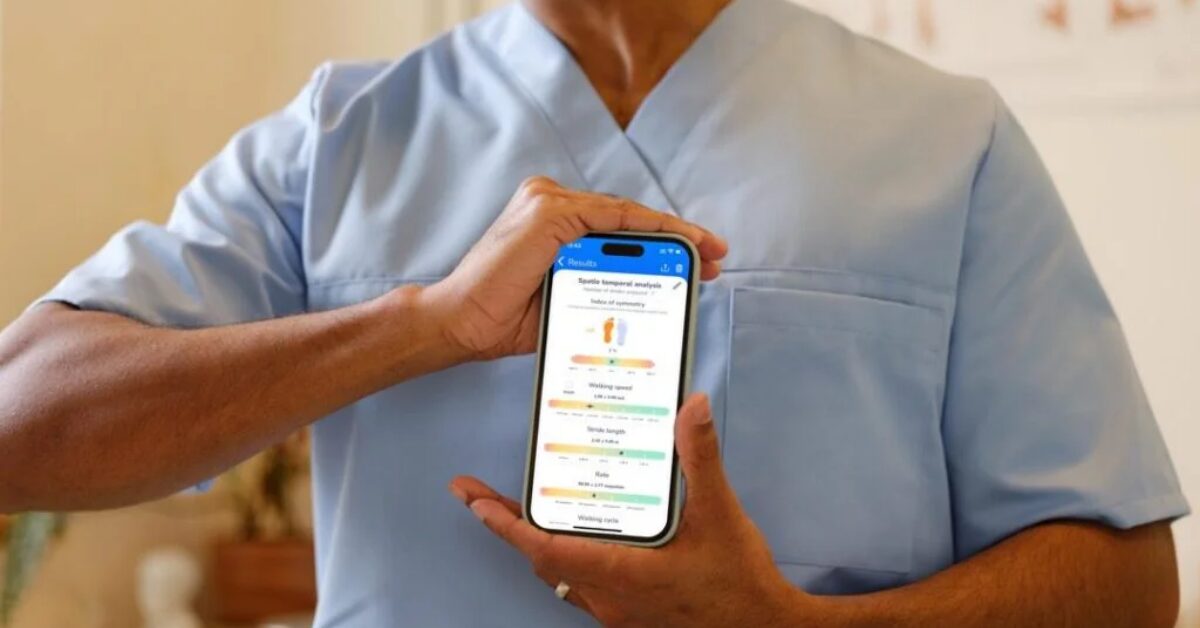
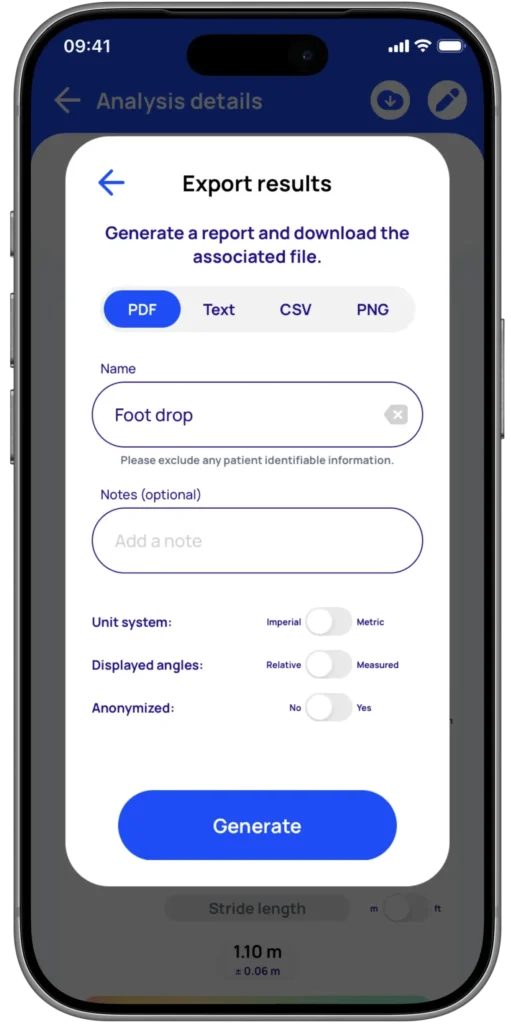
SENSE 2.0 allows data and reports to be exported as PDF, text, CSV, or PNG files and allows patient identifiers to be removed for anonymized use. These downloads can be attached to the medical record or copied/pasted directly into the evaluation/daily note.
Why this matters for PTs:
- Text exports can be pasted directly into the daily note or evaluation body
- Reduces the chance that attachments are overlooked during chart reviews/audits
- Test results can be used for research or teaching without PHI included
How this benefits patients:
- More complete medical records can reduce the risk of delayed or denied care
- Decreased risk of their PHI being breached
By allowing gait data to be exported in text format and pasted directly into the body of the note or evaluation, SENSE 2.0 makes documentation easier to review during care transfers or defend during audits. Alternatively, if a PT wants to send the gait data report separately, SENSE 2.0 can immediately generate an easy-to-view PDF file.
Physical Therapists’ Feedback About REEV SENSE 2.0 Gait Analysis Software
REEV works closely with physical therapists to make sure our technology aligns with their needs and ultimately supports better patient outcomes. The feedback below reflects common themes shared by physical therapists using SENSE in outpatient, legal, and specialty practice settings.
Usability and clinical application:
I have used other gait systems too… but I have to confess, I got lucky and found you guys on the internet. The app is fantastic — so easy to use. For any regular PT or even university system, this is an absolute must-have.
The app gets better every day. I hope you’ll present it at future conventions because it deserves that recognition.
I love the multiple acquisition style. It looks quite functional. Honestly, because you are getting all of them simultaneously. So it takes any hypothetical questions out of the equation. I have to congratulate you guys.
Documentation and defensibility:
Anything that introduces doubt gives them (insurance) a reason to deny. This type of data is invaluable because it removes ambiguity.
Insurance companies are looking for ways to save money, and any documentation that is weak will be denied. Even if it’s eventually overturned, denials cut into the bottom line and ability to serve patients.
The patient experience:
Patients are impressed. We can flip to the last session easily in the app to show their progress and provide real-time feedback.
Chronic pain patients like the simplicity of it. It makes technology more comfortable and less anxiety-inducing. They ask, “Oh, that’s it? That’s easy.
What’s Included With REEV SENSE 2.0
| SENSE Core | SENSE Pro | SENSE Premium | |
| Hardware | 1 Pair of Sensors
(2 sensors total) |
2 Pairs of Sensors
(4 sensors total) |
3 Pairs of Sensors
(6 sensors total) |
| Software | Full Access | Full Access | Full Access |
| Personalized Onboarding | Included | Included | Included |
| Dedicated Support | Ongoing technical and customer support | Ongoing technical and customer support | Ongoing technical and customer support |
| Reporting | 10/month | Unlimited | Unlimited |
| Capture Speed | Fast | Faster | Fastest |
| Ideal For | Small patient volumes and budget-focused clinics | Standard-size clinics with medium patient volumes and average workflow demands | Larger, busy clinics with high patient volumes and heavy workflow demands |
SENSE 2.0: Built With PTs, Designed for Real-World Practice
The SENSE updates reflect what PTs need in the clinic: faster data collection, streamlined documentation, and tools that support clinical decision-making without adding complexity.
By enabling simultaneous acquisition, embedding standardized mobility tests, expanding clinical reporting, and simplifying data export, SENSE 2.0 allows PTs to collect and document more data without extra time or effort. These updates are particularly valuable for patients with effects of CVA, significant deconditioning, or high levels of pain.
This detailed gait analysis data helps PTs demonstrate impairments, progress, and the need for continued skilled care in a way that payors, auditors, or legal teams can also understand.
REEV remains committed to building SENSE in partnership with physical therapists, using real-world feedback to guide every update. The goal is straightforward: technology that fits into clinical workflows, supports PTs, and ultimately leads to improved outcomes for millions of people affected by neurological and other gait disorders.
If you’re already using SENSE and have feedback, we’d like to hear from you. Send us a message.
Haven’t tried REEV SENSE in your clinic yet? Click below to request your free trial.