A case study from Jeff Hiserman’s Spectrum Ergonomics and Occupational Health Services clinic.
Executive Summary:
Jeff was seeing denials, despite providing skilled, effective PT services. Many patients seen in this clinic have chronic and complex conditions, so their progress is slower and nonlinear. Jeff needed a validated way to capture objective gait metrics to demonstrate the need for therapy and the effectiveness of his interventions. He also needed the solution to be fast, billable, and affordable. Jeff successfully implemented SENSE gait analysis technology into his workflows and documentation to back his clinical assessments, justify treatment, and be prepared to rebut denials. He simultaneously boosted patient engagement and motivation.
The Clinic and Patient Population Background:
Jeff Hiserman is a physical therapist with extensive experience treating neurological and musculoskeletal dysfunctions. His clinic practice regularly treats patients with chronic conditions and long-term gait abnormalities. He integrates conventional therapy and regenerative medicine, managing complex recovery goals over extended periods.
Patients with chronic conditions often develop compensatory gait patterns that become familiar and “comfortable” to the patient, but these patterns still put undue stress on joints and contribute to their pain. Patients may think these patterns can’t be changed, but they can improve with skilled interventions. Showing both patients and insurance companies this progress is necessary for success.
The Challenge: Quantifying Gait Analysis for Insurance and Patients
For experienced physical therapists like Jeff, seeing gait deviations isn’t the problem. PTs can quickly observe abnormalities during visual gait assessments. The challenge is finding a time-efficient way to objectively quantify and document what they see so that the patient and insurance companies understand.
Objective reporting for patients with chronic conditions is even more important because progress can be slow. Without objective data that shows clear progress to a layperson, insurance auditors are likely to deny. These denials are costly due to lost revenue and/or expenses related to resubmitting claims. Patients may also terminate treatment before their goals have been met if they don’t see their progress.
A time-efficient, objective, validated way to capture gait analysis metrics was needed in Jeff’s clinic to justify treatments, demonstrate progress, and decrease the likelihood of insurance denials.
Solution: SENSE Gait Analysis & Reporting
Jeff deployed REEV SENSE, a wearable gait analysis system, in his clinic to quantify his patients’ gait metrics during evaluations and re-evaluations. The small, lightweight sensors that the clinic dubbed “candy bars” due to their size, were attached to patients’ shoes or a shoe and leg, depending on what metrics were clinically indicated. Patients then took a 30-second walk, and the SENSE technology generated a full analysis and report.
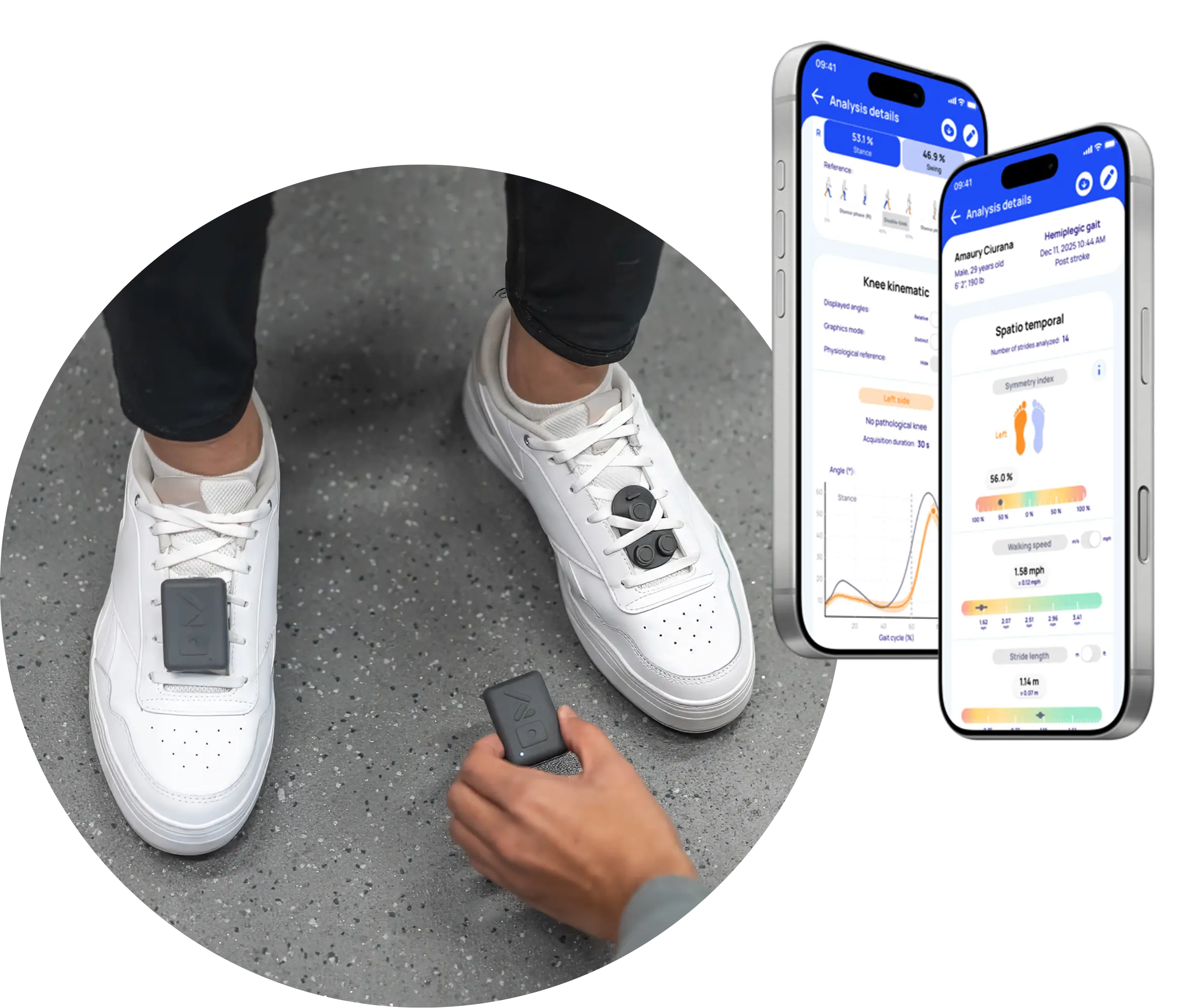
Jeff shows the report to his patients, which details how gait metrics compare to norms, while explaining the treatment plan and goals. SENSE takes under two minutes to use, allowing therapists to complete reassessments as frequently as indicated without losing treatment time or drowning in documentation.
He says this is a time-efficient and ethical way to bill for the code 97750. SENSE provides a way to complete the physical performance test and capture the necessary data to include in the written report.
REEV SENSE Use-Case: Patient with Multiple Sclerosis
One particularly impactful case in Jeff’s clinic involved a patient with Multiple Sclerosis who was being treated for bilateral knee arthritis. The patient presented with poor ankle dorsiflexion while walking back to the treatment area.
Jeff used the Kinematics Analysis Setup method with SENSE to quantify the ankle motion during the patient’s natural ambulation. The data supported his observation and intervention plan, which included therapy focused on proprioceptive neuromuscular facilitation (PNF) and gait training.
When he retested this patient with SENSE, the data revealed the ankle dorsiflexion range was within the normal range, validating his intervention and demonstrating quantifiable improvements for insurance purposes. Best of all, it improved the patient’s gait mechanics, motivated the patient, and showed that improvements are possible, even with a degenerative disease such as MS.
How SENSE was implemented in Jeff’s PT clinic:
Frequency of Use: Jeff reported that a monthly assessment cadence was ideal for most chronic patients. Each SENSE assessment informed therapy for the next 2-4 weeks. This allowed sufficient time for measurable change while capturing information frequently enough for both the insurance company and the patients’ needs.
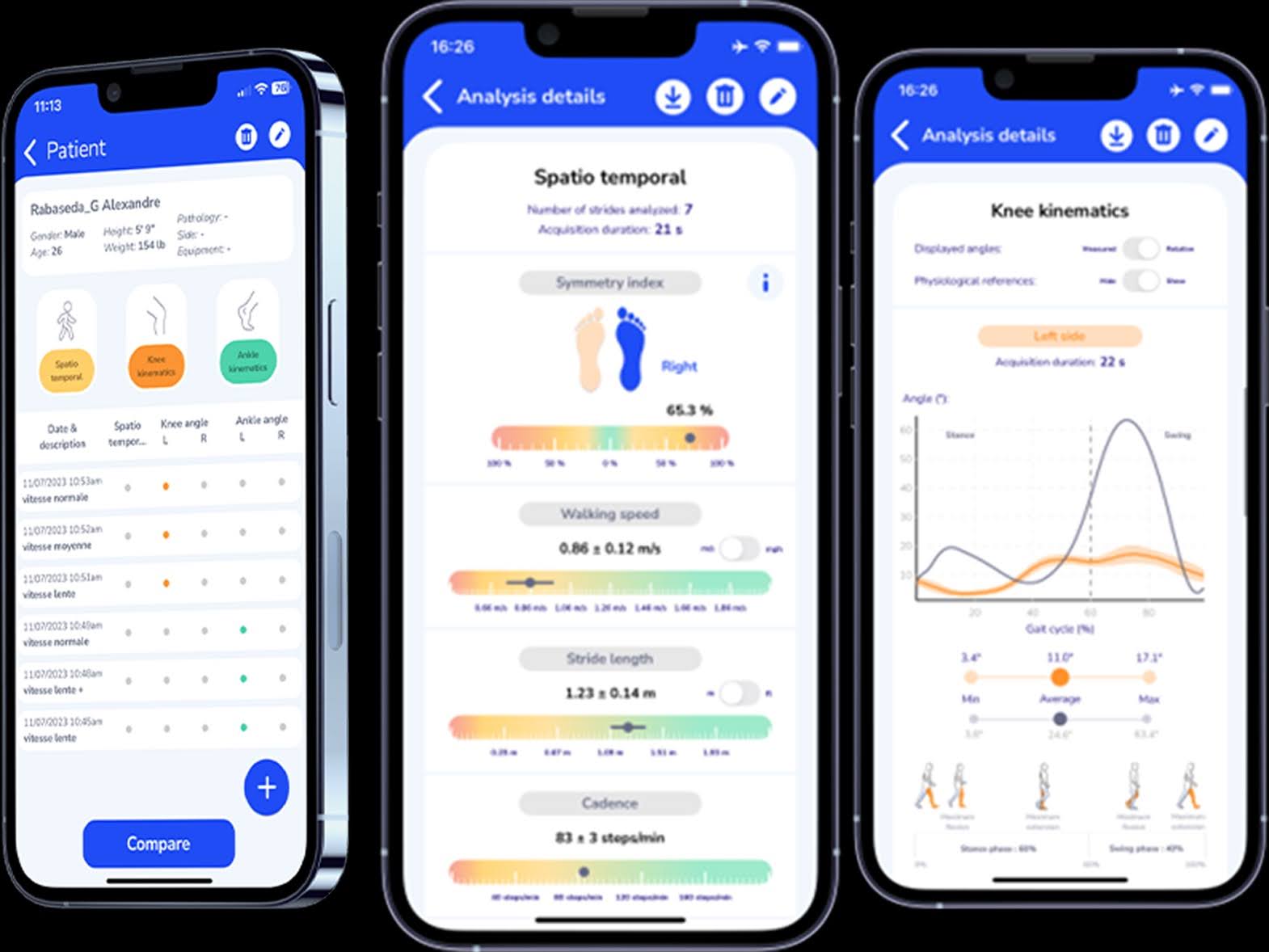
Patient Education: Patients were shown results on the tablet after each assessment. The PT explained how their data compared to norms as well as previous measurements. Within the SENSE app, Jeff could toggle between the patient’s test results to show the improvements. This facilitated ongoing patient engagement, motivation, and fewer cancellations or no-shows.
Assessment Setup: The clinic had a 25-foot hallway that served as the testing area. This allowed for a 30-second acquisition and enough space for patients to settle into their natural gait patterns. The same hallway was used for all subsequent tests. Jeff used either the spatio-temporal analysis setup or the kinematics analysis setup, depending on what he saw during his visual gait analysis and what the patient needed.
Documentation Integration: Data was easily copied and pasted into the clinic’s Tebra software. This supported the clinic’s documentation needs without reducing productivity. Jeff anticipates that this data will help them win appeals and avoid denials, allowing them to be paid more often for the skilled services they provide.
“When we have scientific evidence to back up our documentation, it becomes difficult for them to deny our claims. If they do deny, because they will, we can tell the billing company exactly which notes and assessments to send to justify services and demonstrate medical necessity.”
The Outcomes and Benefits
Objective, Quantifiable Measurements: SENSE provided precise knee flexion or ankle flexion from the kinematics setup. It provided swing and stance time, stride length, speed and cadence, and stance symmetry data from the spatio-temporal setup. The patient’s data is compared against age, gender, and height-matched norms to improve the validity.
Insurance Reimbursement Impacts: Jeff successfully billed using CPT 97750 (Physical Performance Test or Measurement) and 97535 (Self-Care and Home Management Training). He noted improved chances of appeal success for both by using SENSE data to demonstrate functional gains.
Time Efficiency: Jeff agreed that SENSE was practical to use in the clinical setting due to the quick setup, short acquisition time, and the ability to paste the results into the EMR rather than entering them manually. Retesting could be completed more frequently if indicated because of this efficiency. He noted that a therapy aide could also easily enter patient data and set up the sensors to further improve productivity.
Patient Engagement: Showing patients their results compared to matched norms and then showing them their progress over time improved patient engagement and motivation. Since these patients have chronic conditions, progress can be slow, which makes objective data even more helpful as a therapeutic tool.
“I was first interested in SENSE to see if it could help my orthopedic patients with chronic gait abnormalities speed up circuit-building to create a more normal gait pattern again. We can see where they are at the time of evaluation, then see how we’re moving them along. It shows therapists if what we’re doing is effective or not, so we can proceed accordingly. It also gives insurance companies a strong reason not to deny our claims or requests for continued treatment. Technology like this is the way of the future.”
Conclusion
SENSE provided objective and accurate data to support Jeff’s approach to gait analysis and treatments. The case of the patient with MS demonstrates SENSE’s utility with chronic and complex patients. The setup and data collection was time-efficient and fit into his existing workflows rather than disrupting productivity. The data collected by SENSE enhanced patient outcomes and motivation while also supporting billing and documentation efforts. This combination created clinical and financial wins for Jeff’s clinic.