You See the Progress. But Does the Payor?
As a clinic manager, you know your team of therapists does incredible work. You watch patients walk farther, stand more confidently, and give 5-star reviews about the care they receive. The progress is obvious in the therapy gym.
But when you go to review notes and triage insurance denials, you concede that the gains you witness in the gym don’t always show up in the documentation.
It’s not for lack of effort either. Your team is stretched thin, doing their best to balance patient care with paperwork. You’ve seen the sticky notes with reminders or test data sitting on desks, thrown there to jog the memory after a full day of patient care. However, by the time a PT sits down to write the full note, the data doesn’t do justice to the gait analysis or interventions happening in the clinic.
Skilled observation reveals much about a patient’s gait, yet capturing that insight on paper is a separate challenge. Sensor-based gait analysis systems bridge the gap by providing data that quantifies progress to back up the therapist’s narrative observations.
Without objective, defensible gait measurement, costs can add up — financially and administratively.
The Practical Challenges of Measuring Gait
Gait analysis is a core component of PT services. Yet, it’s also a challenging area to measure and show nuanced progress.
Take stride length, for example. A physical therapist can tell when a patient looks like they are taking bigger steps — but how much has it really changed? A few extra centimeters per step might not sound like much, but it represents meaningful and important progress that matters to payors, clinicians, and patients.
To meet standards for objective data set by the American Physical Therapy Association and payors, many physical therapists rely on validated assessments such as the Tinetti, 6-Minute Walk Test, or Timed Up and Go (TUG). These tools provide important insights into gait and balance and remain a key part of clinical evaluation. However, they are time-consuming and don’t capture multiple metrics in one test. Additionally, while these assessments are reliable, they can lack sensitivity to small changes and may not reflect functional walking performance outside of the testing parameters.
As stakeholders demand stronger justification for care, sensor technology like REEV SENSE bridges the gap with a practical way to capture reliable, objective data for documenting gait analysis.
The Importance of Objective Gait Data for Reimbursement
From initial evaluations to daily notes and progress reports, documentation drives how facilities get paid for the therapy services they provide. Accurate, objective data is important to reduce administrative costs related to resubmissions for authorization, lost clients due to denied authorization, or costly Medicare audits.
Payors, including Medicare, increasingly demand objective evidence to justify medical necessity and show meaningful functional gains or the prevention of decline. For a chart reviewer considering service denial, statements like “more stable gait” or “walked 50 feet with stand-by assist” often aren’t sufficient to justify continued care. PTs must demonstrate medical necessity and skilled intervention, backed by measurable progress.
Objective, accurate gait metrics like speed, stance symmetry, stride length, and joint angles turn vague descriptions into defensible data showing progress with gait.
For clinic owners, that kind of defensibility is invaluable. Every year, audits result in significant recoupments due to inconsistent or incomplete documentation. When data is objective and quantified, documentation becomes consistent across clinicians and sites. That can mean fewer denied claims, faster reimbursements, and less administrative burden.
The In-Session and Out-of-Session Costs of Documenting Gait Analysis
Even with AI-assistance and encouraging point-of-service documentation, this work still takes time, and it’s easy for notes to pile up. Allotting time for documentation is costly for companies since therapists are on the clock but not generating billable units. Below, we look closer at the costs of point-of-service documentation and offering documentation breaks.
In-Session Costs: Juggling Competing Demands
In an ideal situation, therapists would collect data and complete documentation during their sessions. They could complete a Timed Up and Go test, enter the results, and then write the note without missing a beat of patient care. But many sessions don’t allow for that level of multitasking. Some patients require physical assistance, gait cues, or close observation, which means the clinician can’t both document and provide good care at the same time.
That time trade-off has a cost. Every minute spent recording or calculating data is a minute pulled away from treatment — and potentially a billable unit lost. So therapists do what they can: jotting notes down, storing numbers in their heads, and adding information later. The result? Missing details, inconsistent data, and weaker documentation.
To make documentation efficient and clinically meaningful, therapists need simple ways to collect accurate data for gait analysis — without pausing treatment or setting up complex equipment.
When objective gait data can be gathered quickly within the flow of a session, therapists spend less time tied to their laptop and more time doing what matters most: helping patients regain mobility and function.
Out-of-Session Costs: Reducing Time on Non-Billable Tasks
Time spent documenting progress outside of sessions isn’t reimbursable; yet, it’s often a significant part of a clinician’s workload. Even the most efficient therapists can spend hours per week scoring results and writing up reports after a day of patient care.
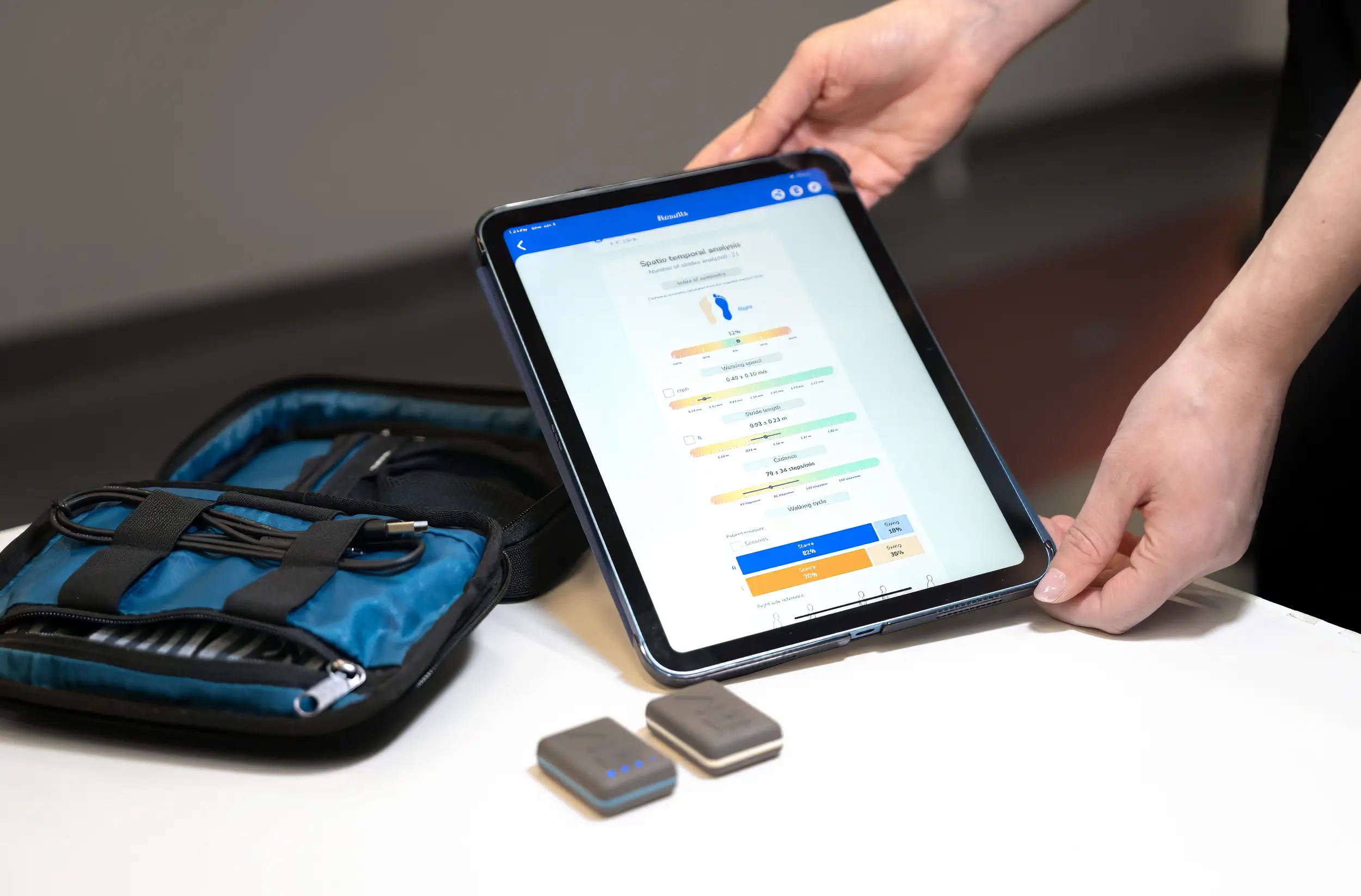
The goal is to keep this time as minimal as possible without sacrificing note quality or compliance. One way this goal is achieved is by leveraging technology to make gait analysis data easy to collect, interpret, and incorporate into documentation to justify therapy services. For instance, REEV SENSE generates data that quantifies gait abnormalities, so reports are stronger and easier to write. (View a sample report here.)
This not only reduces the time spent on non-billable documentation but also enhances the note quality. The data demonstrates irrefutable progress, supports medical necessity, and is more defensible during audits.
Accounting for The Hidden Costs Related to Documentation of Progress
Documentation is often thought of as just another administrative task. It’s a necessary step to satisfy payors and keep charts compliant; however, there are less visible costs associated with documentation that impact both staff and patients.
Clinician Fatigue and Burnout Related to Documentation Expectations
Administrative burden is a leading contributor to clinician burnout. Physical therapists and physical therapist assistants enter the field to help people recover and regain function, not to spend evenings writing notes and calculating scores.
Research (Elinich 2023) shows that high workloads, tight schedules, and extensive documentation responsibilities leave therapists feeling: “…like a hamster running on a wheel going nowhere, working hard every day with a busy schedule with no end in sight,” and as if they are “juggling documentation with patient care.” The energy required to engage fully with patients can be taxing, and when combined with administrative tasks, it contributes significantly to fatigue and job dissatisfaction.
Reducing the time clinicians spend on documentation allows them to focus on what they value most: connecting with patients, guiding rehabilitation, and optimizing outcomes. Streamlined data collection and documentation ultimately help therapists maintain their passion for patient care, improve productivity, and reduce staff turnover.
The Role of Documenting Progress for Patient Retention
Linking documentation with insurance payments has become the norm in healthcare, but we can’t forget that it’s also a tool for motivation. Patients should be able to see their progress, even when it’s slow. Technology that collects objective data clearly shows patients their results. This can improve retention and ultimately, your bottom line.
Imagine you’re a patient re-learning how to walk after a stroke. You have to arrange transportation and pay a co-pay to attend physical therapy twice per week. Every two weeks, your therapist shares the results from their progress note. You notice the distance you’re walking is roughly the same each time. Your therapist says you’re walking better, but without concrete evidence, doubt sets in, and you question whether you should continue coming.
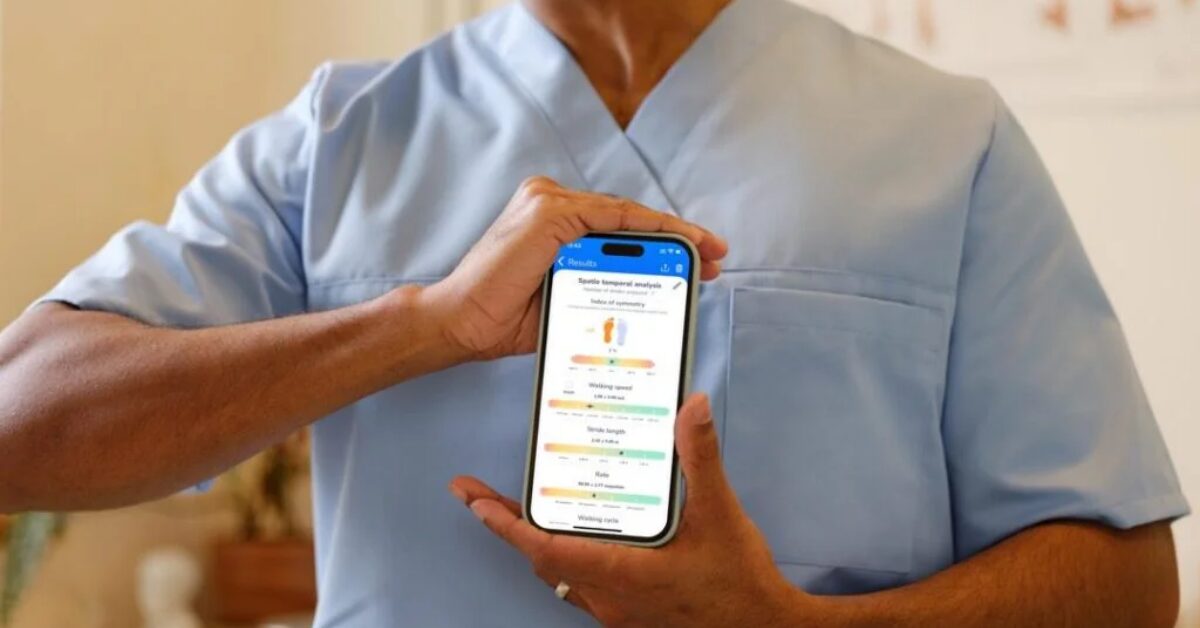
Now imagine your therapist uses gait analysis technology like REEV SENSE. In addition to distance, you now see metrics like gait speed, stride length, and symmetry. Improvements in these measures may even show up before walking distance improves, giving patients real-time feedback and tangible evidence of progress.
When patients see their improvements through data like stride length or walking speed, they better understand that therapy is working. Then, they’re more likely to complete their plan of care, which means better outcomes, higher satisfaction ratings, and improved ROI on the episode of care for your facility.
Technology-Enabled Objective Gait Metrics Are the Future of Efficient Care
Objective data supports and enhances clinical observations. It removes the doubt from documentation, clarifies progress, and protects both clinicians and clinics.
When documentation becomes simpler, defensible, and meaningful:
- Clinicians experience less frustration and fatigue.
- Clinics reduce administrative costs and audit risks.
- Patients see progress in real time and stay engaged in their recovery.
Easy-to-use technology that generates objective data is a win-win for clinicians and facility ROI.
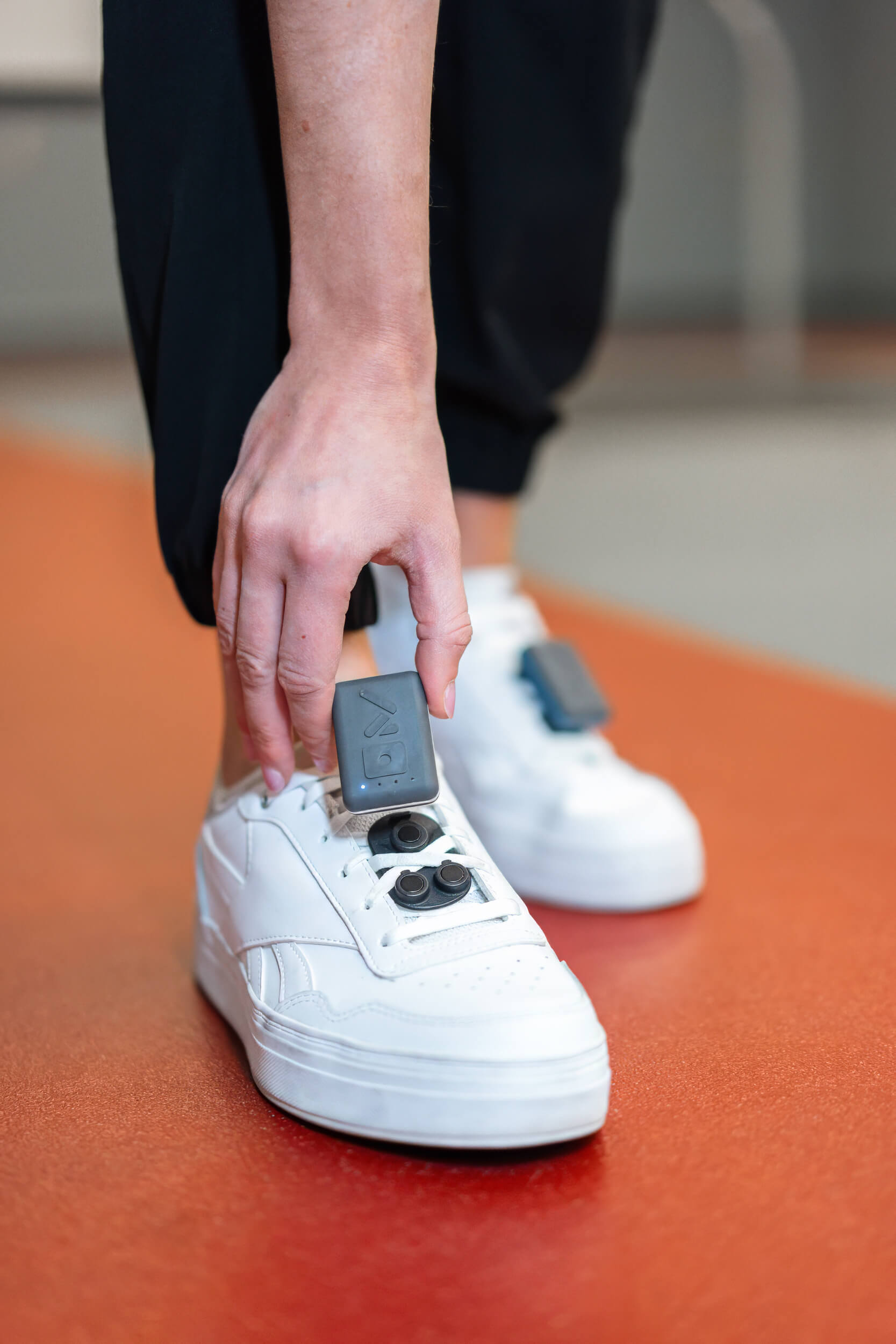
REEV SENSE is technology that brings accurate, objective data to clinics. The wearable motion sensors capture gait metrics like speed, cadence, stride length, and stance symmetry in less than two minutes. The REEV app generates comparative graphs with this data that can be copied and pasted into a report or daily note in any electronic medical record. This detailed gait data supports defensible documentation and medical necessity.
For clinics and administrators, this means reduced audit risk, lower administrative costs, objective evidence of patient progress, and happier clinicians who can focus on patient care rather than staying late charting.
Try REEV SENSE, our motion analysis sensors, for free.
The best way to experience the benefits and ease of this technology is in your facility with your patients. We’re committed to demonstrating its efficacy and utility, which is why we’re offering a free trial to qualified physical therapists. Click below to get a quote and request a free trial.
References
Strunk, E. R.(2011) WHY DO YOU DOCUMENT?. GERINOTES, 4.https://aptageriatrics.org/wp-content/uploads/2022/01/GeriNotes-18-1.pdf#page=4
Coffman, Anne. (2003). Documenting Gait Training for Medicare Reimbursement. Topics in Geriatric Rehabilitation. 19. 220-226. https://www.nursingcenter.com/journalarticle?Article_ID=524179&Journal_ID=515682&Issue_ID=524\160
Elinich, Jennifer & Wynarczuk, Kimberly & McCormick, Elizabeth. (2023). Perceptions and experiences of burnout: A survey of physical therapists across practice settings and patient populations. Physiotherapy Theory and Practice. 40. 1-12. https://pubmed.ncbi.nlm.nih.gov/37830345/
Kamper, S. J. (2019). Fundamentals of measurement: Linking evidence to practice. Journal of Orthopaedic & Sports Physical Therapy, 49(2), 114–115 https://www.jospt.org/doi/10.2519/jospt.2019.0701